Every living room holds two categories of things: objects you want to see, and objects you'd rather nobody saw. Remote controls. Charging cables. A stack of board games with three missing pieces. Open shelving is wonderful for the first group and merciless about the second. Closed cabinets do the reverse — they swallow the mess but hide the good stuff too. The useful question isn't which style wins. It's which parts of your room belong to each, and what that means for the piece you actually buy.
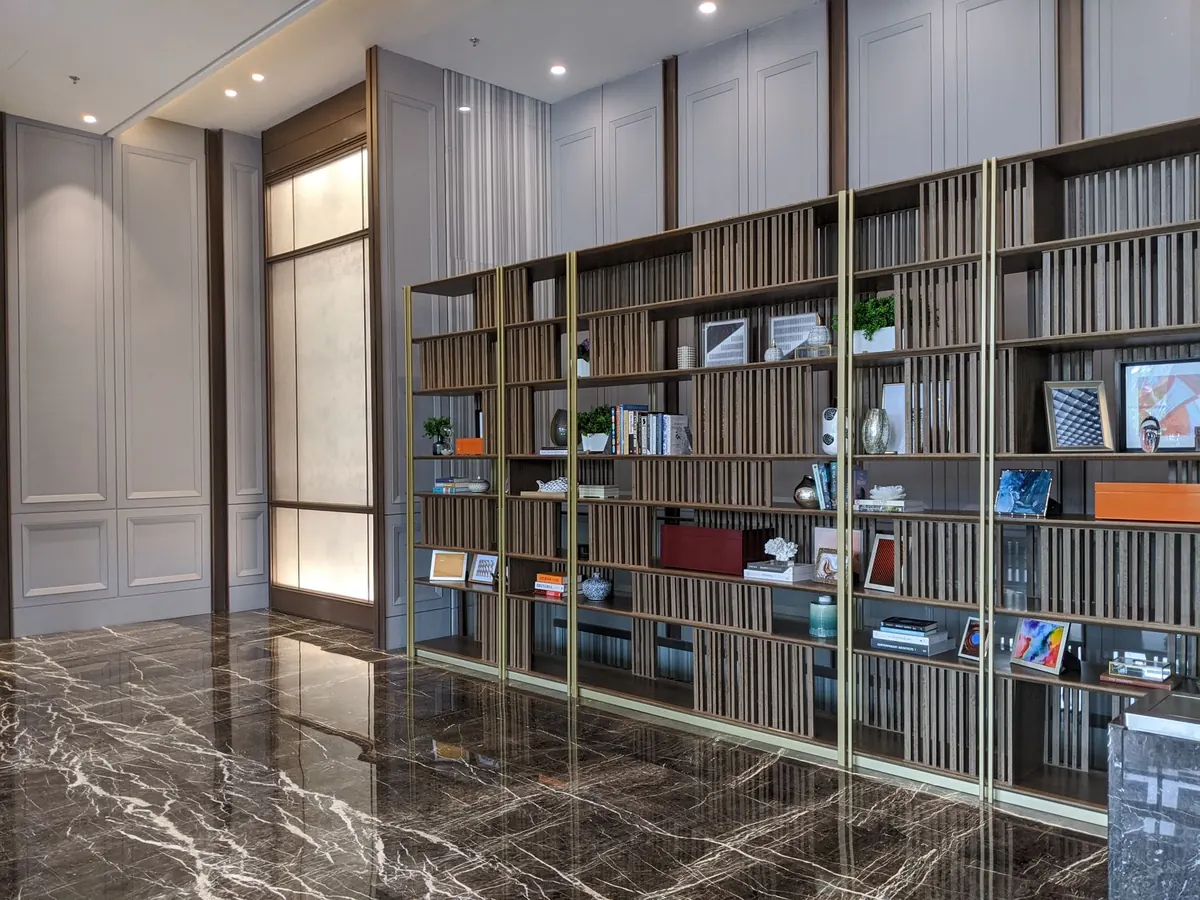
Open storage earns its place when the contents deserve attention: books you reread, ceramics, framed photos, a record player, a plant with a fighting chance. Because there's no door between you and the object, a shelf can carry more visual weight than its size suggests, which is why open shelving works so well in small or dark living rooms. A wall of floor-to-ceiling cabinets in a deep finish can turn a narrow room into a tunnel; open shelves keep the wall breathing.
There's a practical benefit too. Open shelves are easy to reach, easy to rearrange, and easy to dust in the sense that you can see what needs attention. If you like rotating what's on display — heavier wool and wood in winter, lighter ceramics and greenery in summer — an open unit makes that a ten-minute job instead of a full afternoon.
Two costs show up after the styling photos are taken.
The first is dust. Every open surface collects it, and so does everything sitting on that surface. Wiping one empty shelf takes seconds; dusting a shelf crowded with eighteen small objects takes considerably longer and involves lifting each one. If you have pets, allergies, or a living room with windows open most of the year, plan on a weekly pass.
The second is visual noise. A shelf loaded top to bottom gives your eye twenty competing focal points, and even a collection of genuinely nice objects starts to read as clutter. The fix is editing: leave roughly a third of each shelf empty, group objects in threes and fives, use a tray or a stack of books to corral small items into one shape. It works. It just isn't a one-time job, especially in a house with children who treat low shelves as a transfer station.
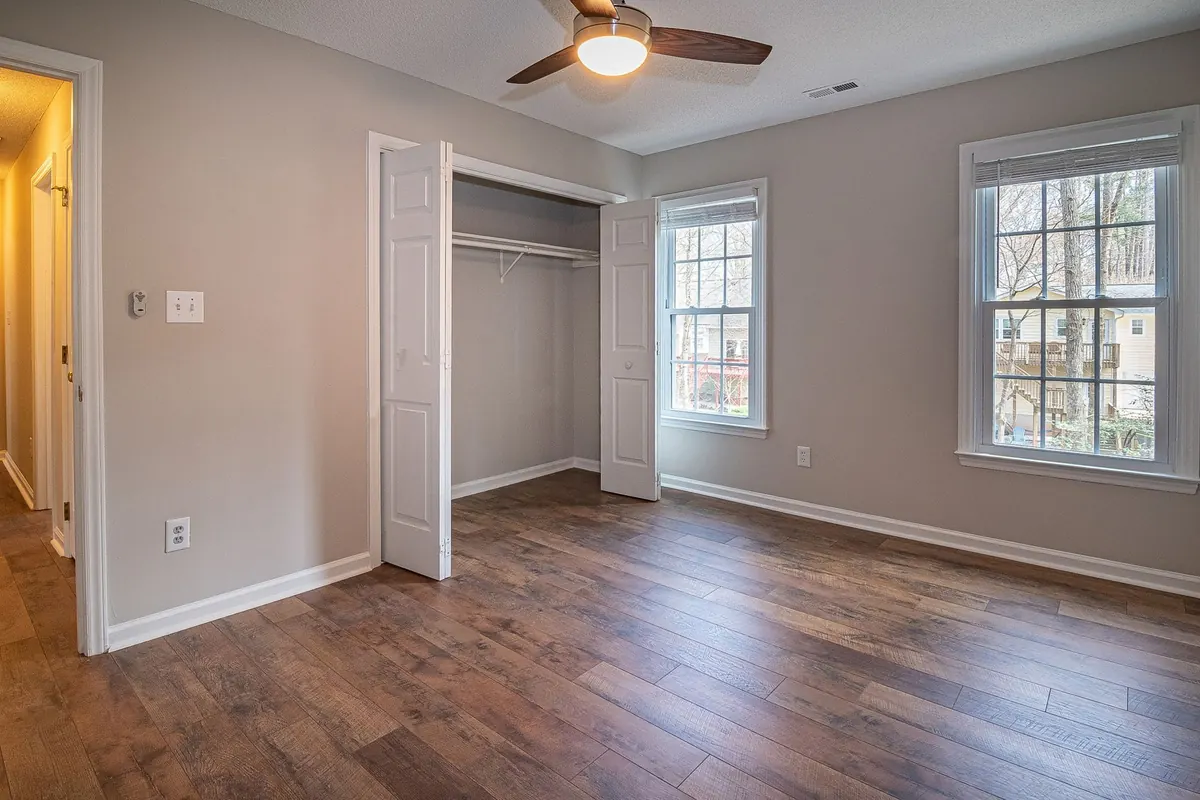
Doors are a mute button. Close them and the router, the wires, the console, the toys, and the pile of mail all disappear. That visual quiet is the whole argument for closed storage, and it's a strong one in a room where you relax. Rooms with closed storage also tend to stay tidier, because there's no surface inviting you to set something down "for now." The flat top of a cabinet is, admittedly, its own kind of trap — leave a tray there and it becomes deliberate rather than random.
The trade-offs are real. Cabinets cost more than open shelving of the same footprint, since you're paying for doors, hinges, and hardware. They need clearance to swing. And they can hide things so thoroughly that you forget you own them, which is how people end up buying a third tape measure.
Closed storage also only stays calm if the inside has a system. One category per shelf or per bin, clear or labeled containers for small items, dividers for the drawer that holds batteries and chargers. Without that, you get a cabinet that no longer closes, which is worse than open shelving because you've paid extra to hide the problem.
The console under the television is the piece where this decision matters most, and it's usually the easiest place to mix both types of storage.
Cable box, router, game console, spare remotes. Solid doors hide them, but electronics need airflow. Choose a console with an open back or ventilated doors rather than a sealed box; trapped heat shortens the life of anything inside. Leave a few inches behind the unit, and use hook-and-loop ties or a cable raceway so you can pull the console out to clean without untangling a nest.
A soundbar, a few books, a bowl for keys if the console sits near the entry. Open sections also break up a long run of doors, which keeps a big piece of furniture from looking like a wall.
One shallow drawer handles remotes, controllers, chargers, and manuals better than a shelf with bins on it. Line it with felt or cork so the contents don't rattle every time someone drops onto the sofa.
If you're drawn to glass doors, be honest about what's behind them. Glass hides nothing and reflects whatever is across the room, including the television. Frosted or fluted glass is a forgiving middle ground.
Work through these before you buy:
Tape the outline of the piece on your wall and floor with painter's tape, then live with the empty shape for a week. You'll learn whether the height feels right from the sofa, whether the walkway pinches, and whether that wall wants something solid or something open.
If you're still undecided, buy the closed version. Open shelving is easy to add later — a pair of wall brackets above a console, a slim ladder shelf in a corner — and in small doses it rarely overwhelms a room. A full wall of open shelves that reads as clutter is a much harder mistake to walk back.
Photo: 23555986 / Pixabay